My Teacher Gave Up On Me After 2 Lessons. Here's What I Did Next.
By Harry Rios
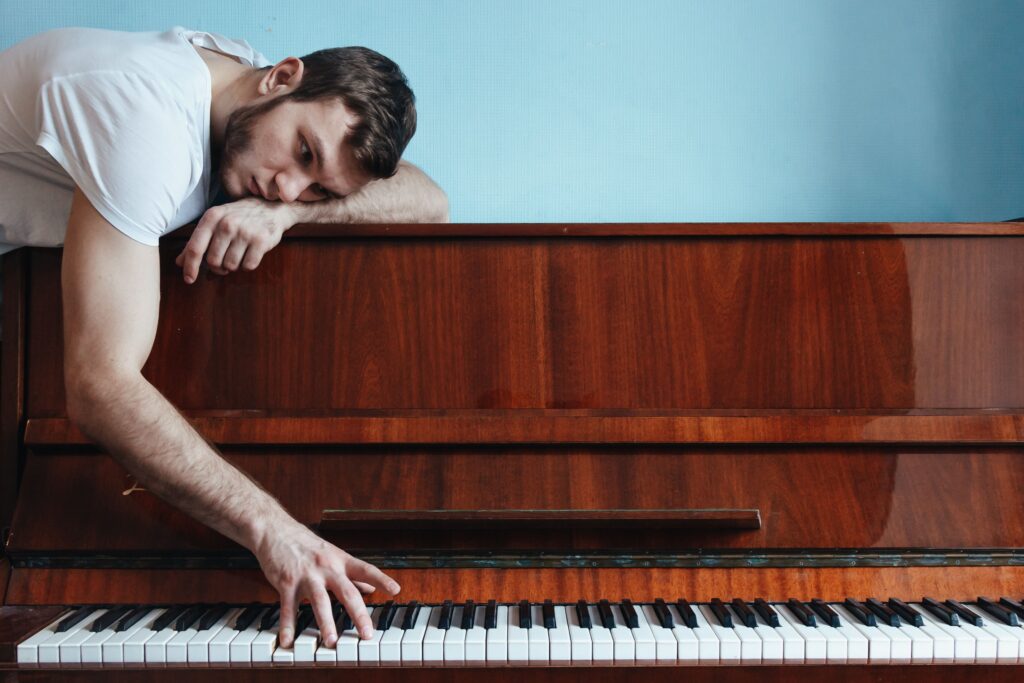
He's sitting in his car in the driveway, keys still in the ignition, not ready to go inside yet.
Lesson two just ended. It didn't go well. The teacher kept sighing in that way where she's trying not to sigh, correcting the same hand position for what felt like the tenth time, glancing at the clock a little more than usual. At the door, she said, "Maybe piano isn't for everyone," in a tone that was supposed to sound kind and instead landed like a verdict.
He sits there a while. Replays it. Wonders if she's right.
He's not a kid bursting with natural rhythm. He's thirty-something, a little nervous under pressure, slower to pick things up than he used to be — or maybe just slower than he remembers being, back before mortgages and meetings and everything else that fills up a week now. He'd been so excited two weeks ago. He'd bought the keyboard. Cleared a corner of the living room for it. Told his partner, half-joking, half-serious, "I'm finally going to learn."
Now he's doing the math on whether to cancel the next lesson, sell the keyboard on Facebook Marketplace, and just let the whole thing go quietly back to being a thing he used to want.
If you've ever sat in some version of that car — maybe not literally, but emotionally — I want you to know two things before we go any further.
First: that teacher was wrong. Not about your hand position. About the bigger thing she implied without quite saying it.
Second: walking away from one bad experience with piano is completely different from walking away from piano itself. There's a version of this where you don't need her, or any teacher right now, to keep going.
Let me explain what I mean.
You Are Not "A Little Slow." You Are an Adult Beginner.
I want to address something I hear constantly from adults starting out, in one form or another:
- "My teacher gave up on me after 2 lessons. I'm just a little slow and nervous."
- "Being an adult beginner playing alongside a bunch of younger, more advanced pianists really bruised my heart."
- "I had half a mind to cancel my lessons, sell my keyboard, and never think about piano again."
Here's the thing nobody tells you walking into your first lesson: most piano instruction in this country was built around children. The pacing, the patience built into the curriculum, the assumption that you have years ahead of you and nowhere urgent to be — all of it was designed for an 8-year-old whose only job that afternoon is piano. It was never built for someone learning a brand-new physical skill while also running a household, holding down a job, and trying to fit twenty minutes of practice between dinner and bedtime.
When that system doesn't bend to fit you, it's easy to internalize the mismatch as a personal failing. I'm slow. I'm nervous. Maybe I just don't have it. But you're not slow. You're an adult, doing something most adults never even attempt, inside a system that wasn't built with you in mind.
And the comparison to younger, more advanced players in a group setting? That's not a measure of your potential. It's a measure of how many more hours they've logged, often with far fewer responsibilities pulling at their attention. It says nothing about whether you can learn. It says something about who that particular room was designed for.
"Is It Too Late?" Let's Actually Answer That.
I get this question constantly, in almost every shape it can take:
- "It's been a dream of mine since I was 5, but I never had the chance to start. Is it too late?"
- "What's the best way to start learning piano as a 30-year-old? I don't need to reach a professional level, I'd just like to play some songs."
- "I played 15 years as a kid, stopped for the last 10 once I went to university, and haven't touched a piano since."
Here's my honest answer: it is not too late, and the reason has less to do with your age and more to do with what you're actually trying to accomplish.
If your goal is Carnegie Hall, sure — there are realities about starting young that matter for a concentrated handful of people pursuing concert careers. But that is not what almost anyone reading this wants. You want to sit down and play songs you love. You want the satisfaction of your hands finally doing what you've imagined them doing for years. That goal has no age limit, and it never did.
If you're coming back after a long break — fifteen years of childhood lessons, a decade of silence since college, whatever your version looks like — there's actually good news hiding in your situation that beginners don't have. The motor patterns, the sense of the keyboard under your fingers, the basic relationship between what you hear and where your hands go: none of that fully disappears. It goes quiet, not gone. Returning players almost always relearn faster than they expect, because they're not building from nothing. They're reactivating something that's still in there.
"My Parent Can't Pay for Lessons Anymore. Is It Okay to Go Self-Taught?"
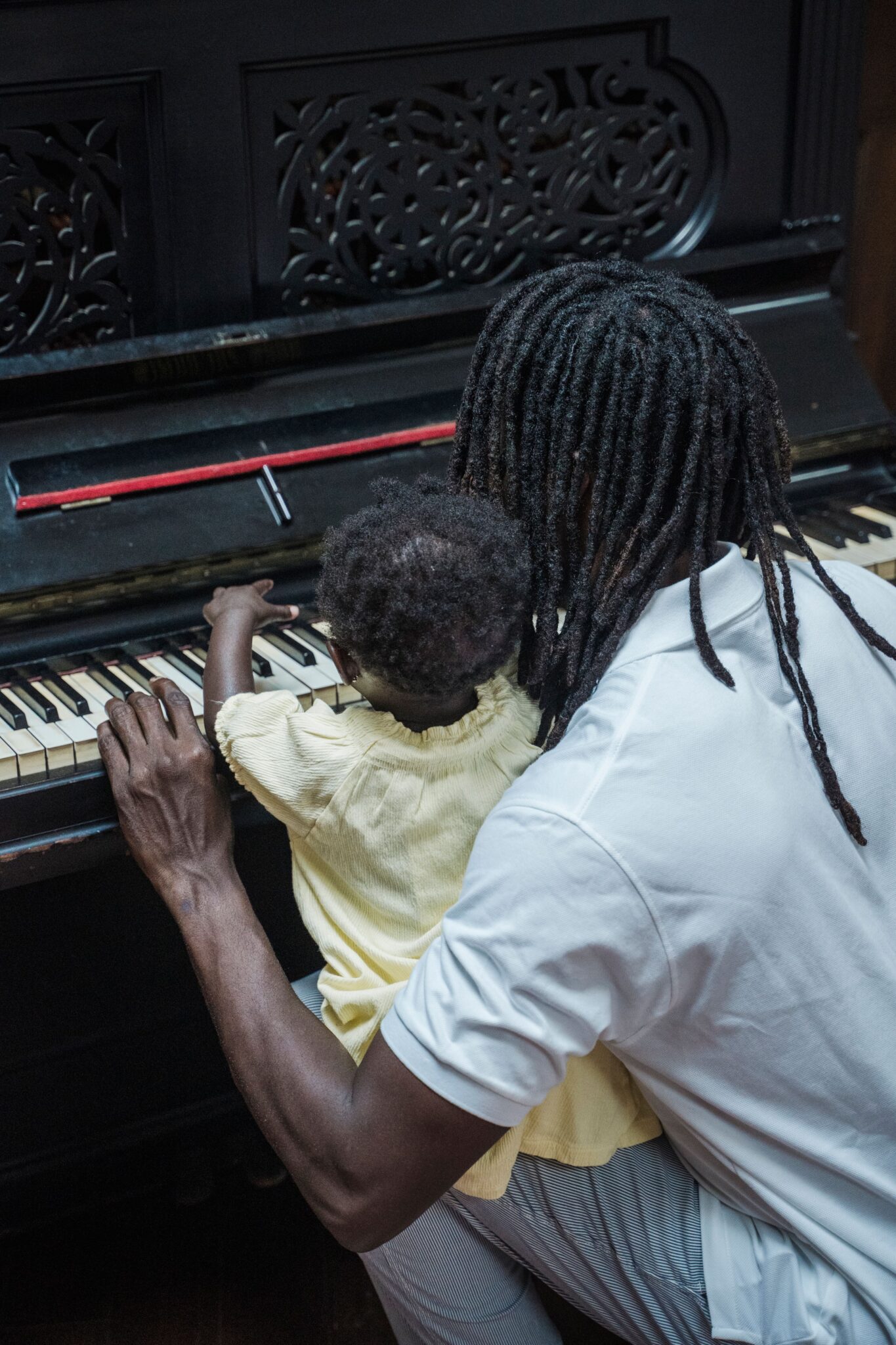
This question comes up more than you'd think, and not just from teenagers — adults ask me a version of it too, usually phrased as guilt: "I loved my lessons. I just can't justify the cost right now. Am I giving up if I go it alone?"
No. You're not giving up. You're changing format, not abandoning the goal.
It's worth knowing that the research on adult learning actually supports this more than people assume. Psychologists who study self-directed learning have found that when learners have real autonomy and control over how they learn — setting their own pace, choosing their own material, directing the process themselves — they consistently show improved memory and retention for what they learn, compared to being guided entirely by someone else.
There's also a well-documented difference in psychology between what researchers call autonomous motivation — learning because you genuinely want to — and controlled motivation, which is learning because of outside pressure or obligation. Recent research consistently finds that autonomous motivation leads to deeper engagement and better emotional well-being throughout the learning process, while controlled motivation tends to produce more anxiety and burnout.
Read between the lines of that, and here's what it means for you: showing up to practice because a parent is paying for it, or because a teacher is waiting for you on Tuesday, is controlled motivation. Showing up because you want to hear yourself play that one song you've had in your head for years — that's autonomous motivation. And it turns out that's not the lesser path. In a lot of ways, it's the stronger one.
"I Tried Piano Apps, But They Felt Like Muscle Memory, Not Real Learning"
This is one of the sharpest, most accurate complaints I hear, and I want to validate it directly: "I've tried downloading those piano apps, but they seem too easy, more muscle memory than actually learning."
You're not wrong. Most of those apps are built on a "watch and copy" model — they light up a key, you press it, you move on. You can finish entire songs that way without ever understanding what you just played: which notes formed the melody, which formed the harmony underneath, why the song felt the way it felt. It's the piano equivalent of tracing a drawing instead of learning to draw. You end up with a copy of the picture and none of the skill that made it.
That gap is exactly why I built MyPianoByEar around a different idea entirely: teaching your ear to actually understand music, not just teaching your fingers to mimic a screen. When you learn to hear the structure of a song — the melody, the chords underneath it, the rhythm holding it together — you're not memorizing one specific song. You're building a skill that transfers to every song you'll ever want to learn next.
What To Actually Do With Three Months a Week and a Full-Time Life
And finally, the constraint almost everyone names, whether they say it directly or just imply it through everything else: "I work full time, I have a family, free time is scarce. This is one of the hardest things I've ever undertaken."
I believe you. And I'd push back gently on one word in that sentence: hardest. It's not hard because you lack ability. It's hard because you're trying to build a new skill inside a life that's already full — which is a completely different and much more forgivable kind of hard.
The fix isn't finding more hours in your week. It's making the minutes you do have actually count, with a structure that doesn't require a teacher hovering over your shoulder, doesn't require you to "catch up" to anyone, and doesn't punish you for missing a day here or there. Adult learning, done well, bends to fit your life. It doesn't ask your life to bend to fit it.
Back To That Driveway
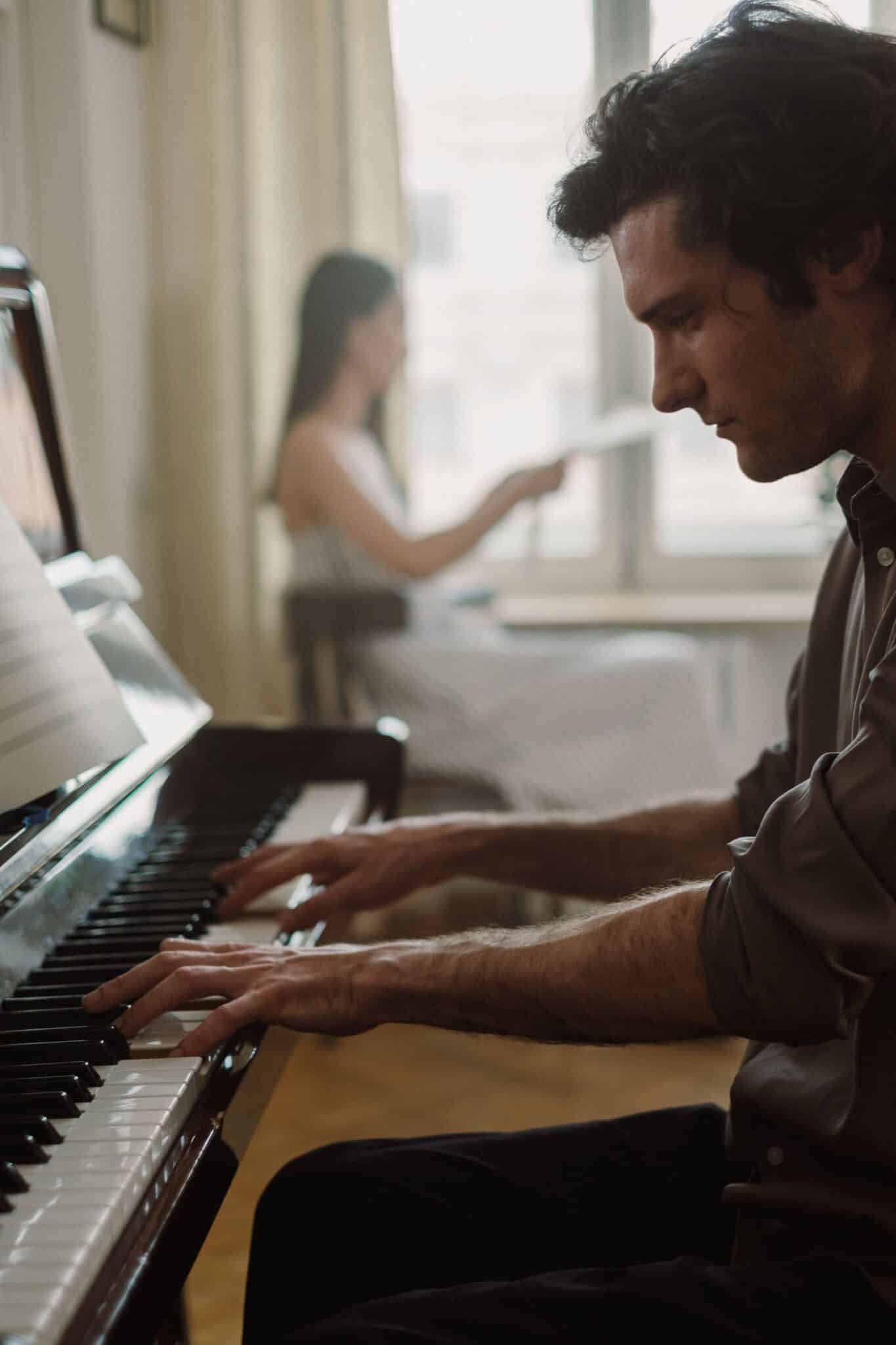
So — back to him, sitting in the car, deciding whether to sell the keyboard.
Here's what I'd want him to know, and what I want you to know if any part of his story overlapped with yours: one teacher's patience running out after two lessons is not a verdict on your ability. It's one data point, from one person, in one format that may have simply been the wrong fit. It says nothing about whether you're capable of learning this instrument the way you've always wanted to.
You don't have to go back to that lesson. You don't have to sell the keyboard. You don't have to compare yourself to anyone in any room, younger or more advanced or otherwise. You just need a starting point built for exactly where you are — a full life, real nerves, zero shame, and a goal that's always just been to sit down and actually play something you love.
That's exactly what I built the free Beginner Piano Course to be.
You don't need to start over. You just need the right starting point.
The free Beginner Piano Course at MyPianoByEar.com is built for adults — busy schedules, rusty memories, zero musical background, and all. No comparisons. No judgment. Just a clear path forward, on your own time.
Check Out the Free Beginner Course →Built for real adult life. Go at your own pace, on your own time.
See you on the other side. — Harry